 ToneBird
Muse Alternative for Replies (Tested & Reviewed)
Compare ToneBird and Meta Muse for ongoing conversations, personal voice, and agent tasks, with original reply examples and clear tradeoffs.
 By Xinran Zhao
ToneBird is a Muse alternative for ongoing conversations where earlier agreements, personal voice, and open questions affect your next reply. Its desktop assistant connects those details with rewrites, tasks, and meeting preparation.
Muse is Meta's broader personal AI agent. In my writing examples, it produced a cleaner work rewrite and a more suitable final personal reply. It also carried an unsupported detail into that final revision, so polished wording still needed checking.
This ToneBird vs Muse comparison covers both the product choice and those specific results. It explains each assistant's context and how a draft returns to your conversation. It also separates agent actions from reply suggestions. The examples come from my original tests. Product information was checked on November 6, 2026.
TLDR
- ToneBird suits continuing relationships where the person's history, your voice, and unfinished work should shape the next reply.
- Muse suits a broader personal agent task. Its memory and app connections should remain part of the comparison.
- Muse's final personal reply better matched my request, but kept an invented claim about being quieter with everyone.
- My tests covered chat writing and ToneBird's Slack workflow. They did not evaluate Muse's connected actions or either product's memory accuracy.
What is ToneBird?
ToneBird is an AI reply assistant for macOS and Windows. It works with conversations in apps such as Gmail, Slack, and WhatsApp.
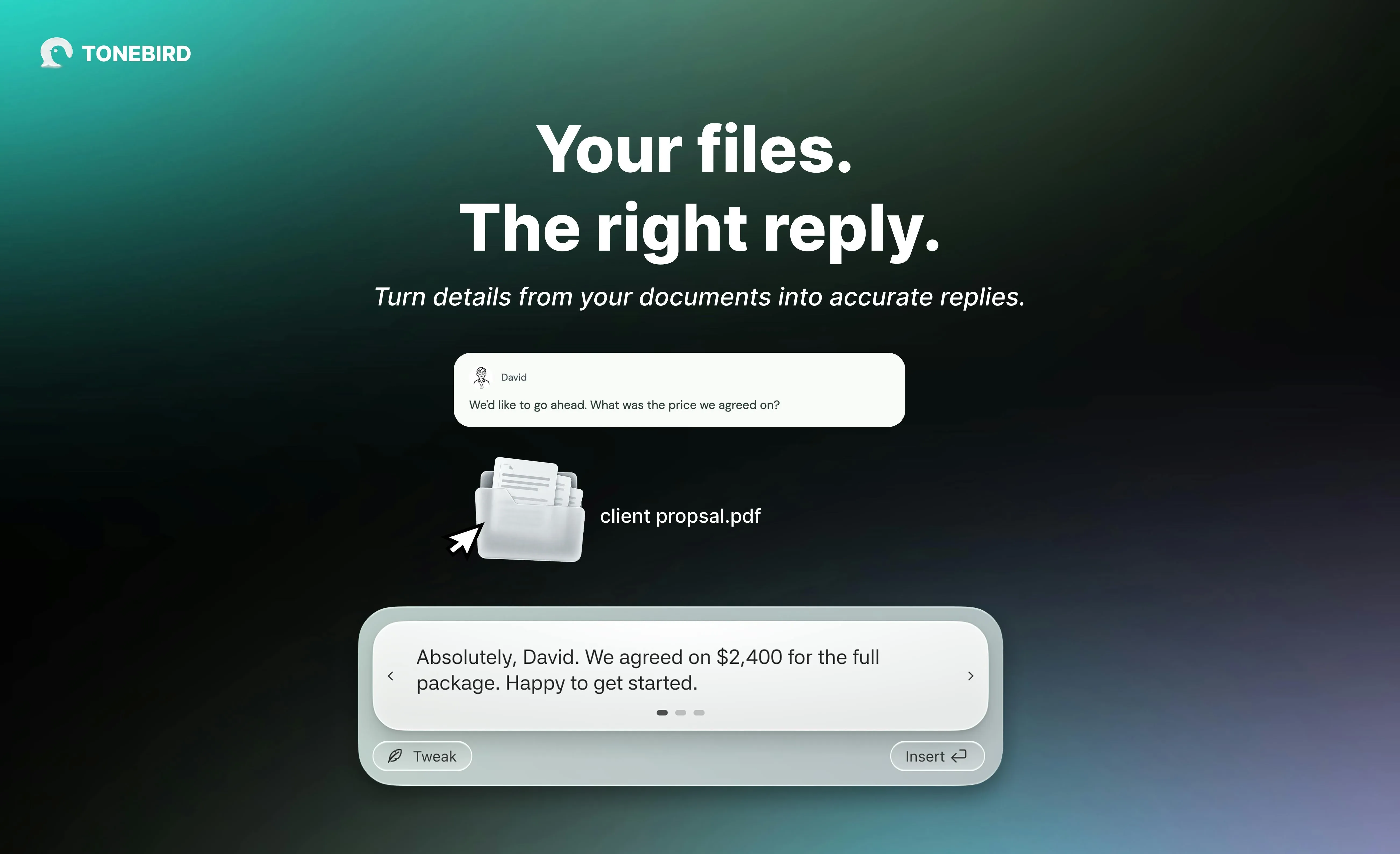
Its purpose is to carry useful background into the next reply. That includes who the person is, your writing preferences, and what remains unresolved.
Home brings waiting replies and open tasks together. Circle organizes people, captured conversations, and related work. Rewind opens the available history for a person.
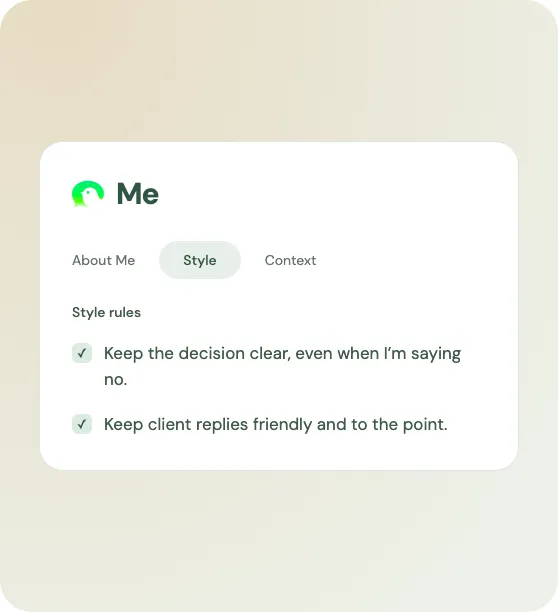
Me holds your information and writing preferences. Style supplies reusable wording rules and openers, with suggested learning waiting for your approval.
Context holds notes or imported text documents. Those facts can help a reply reflect an earlier agreement instead of only the latest request.
These parts support relationship memory, your own voice, and the next action arising from a conversation.
How does a conversation become a reply and a next step?
Suppose a client asks for work outside the original scope. The reply needs the existing agreement and your decision about the extra work.
ToneBird can use available person records and context while drafting. You compare candidates, adjust one with Tweak, then choose Insert.
Insert puts the text in your message box. You check it and send it yourself.
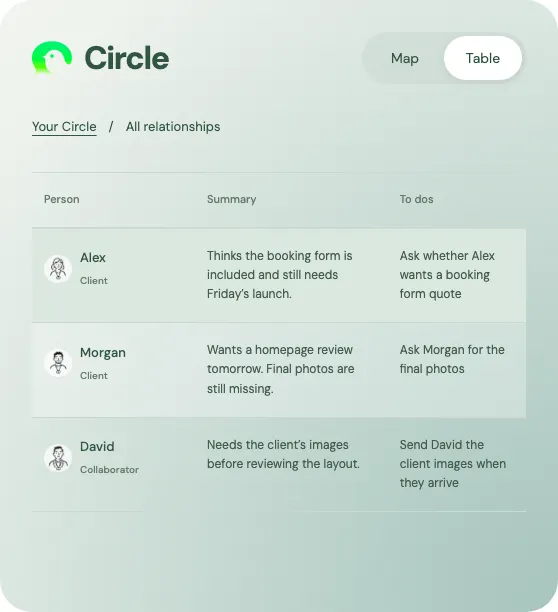
The related work can continue beyond the message. ToneBird records conversation tasks and prepares Apple Calendar or Google Calendar events for confirmation.
That is a wider reason to choose it than simply saving a trip to another app. The tests below did not measure these features over time.
What is Muse?
Muse is Meta's personal AI agent. You can give it requests through its own interface or WhatsApp, with access depending on availability.

Muse uses a persistent cloud computer, called Muse Secure VM, with a browser for tasks. It can work with connected services under your permissions.
ToneBird instead centers its workflow on people, available conversation history, personal voice, and related work beside your existing messages.
Requests and connected actions are different
In my tests, Muse used pasted messages and writing instructions. Its sidebar listed the writing requests, which made them easy to revisit.
That list did not establish that it had changed anything in Slack. I had not connected Slack, email, or a calendar.
Meta's launch announcement describes longer tasks, memory, and approval before sensitive actions such as sending email or making purchases.
ToneBird's tasks and calendar preparation serve the conversation workflow. They should not be mistaken for a general browsing or purchasing agent.
What should each assistant know before drafting?
Muse can retain useful information and use authorized connections. It should not be described as having no memory or always needing pasted context.
ToneBird separates available person history, writing preferences, and supporting facts through Circle, Me, and Context. You can inspect those sources when needed.
For either assistant, verify that it knows the right person, earlier commitment, and current intention. A remembered preference cannot establish a missing fact.
How do the workflows compare?
Your task | ToneBird | Muse |
|---|---|---|
Use previous context | Person records, captured history, preferences, and notes | Memory and permitted connected services |
Start the tested reply | Open suggestions beside Slack | Paste the message in a Muse chat |
Change the wording | Candidates and Tweak | Continue with another instruction |
Return to the conversation | Insert, then manual sending | Copy the reply in the tested route |
Continue the work | Conversation tasks and calendar preparation | Broader tasks and agent actions under permissions |
What was evaluated | Captured Slack suggestions | Chat writing, without connected actions |
The different starting points matter. These results compare final drafts and workflows, rather than identical first attempts.
Keep personal voice and intent together
ToneBird's Me and Style controls reuse your preferences. Tweak changes the current draft without treating every instruction as a permanent rule.
A smart reply study described two randomized experiments involving 1,036 participants. Suggested replies affected emotional language; perceived AI use was associated with less favorable judgments.
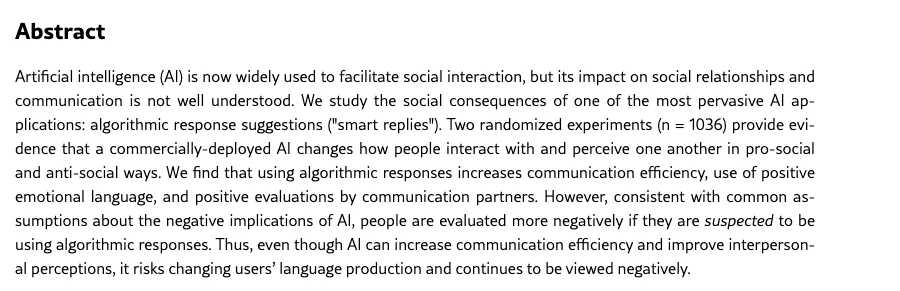
Those experiments did not test either product here. They explain why I judge a warm reply by its meaning as well as its friendliness.
Context matters for a different reason: it can supply information relevant to the next answer. A 2025 study followed 5,172 customer support agents at one firm. AI access increased issues resolved per hour by 15% on average, with effects varying across workers.
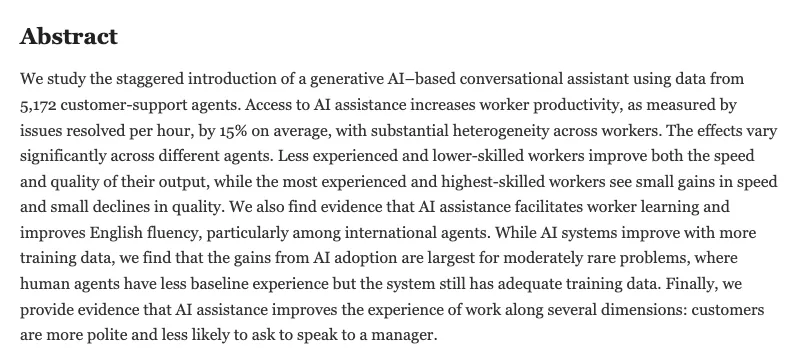
The study concerns another assistant in customer support. It does not measure ToneBird, Muse, or the value of their memory features.
How I compared the replies
This comparison is published by ToneBird and uses my original records. New documentation checks do not count as new product tests.
I tested ToneBird in Slack desktop and Muse at muse.ai in Chrome. Muse received the messages and my intentions manually.
ToneBird's examples include earlier suggestions reused across the comparisons. They are the same observations, not independent tests repeated for every article.
The record does not establish the exact model or subscription for each tool. I did not evaluate connected actions, speed, or lasting memory accuracy.
Rewriting an impatient work message
The original message was:
I already sent this yesterday. Please check before asking me again.
I asked for friendlier, more professional wording without changing the meaning.
Muse's rewrite
Just a quick heads-up — I sent this over yesterday, so it should be in your inbox. Could you take a look when you get a chance, and let me know if you can't find it?
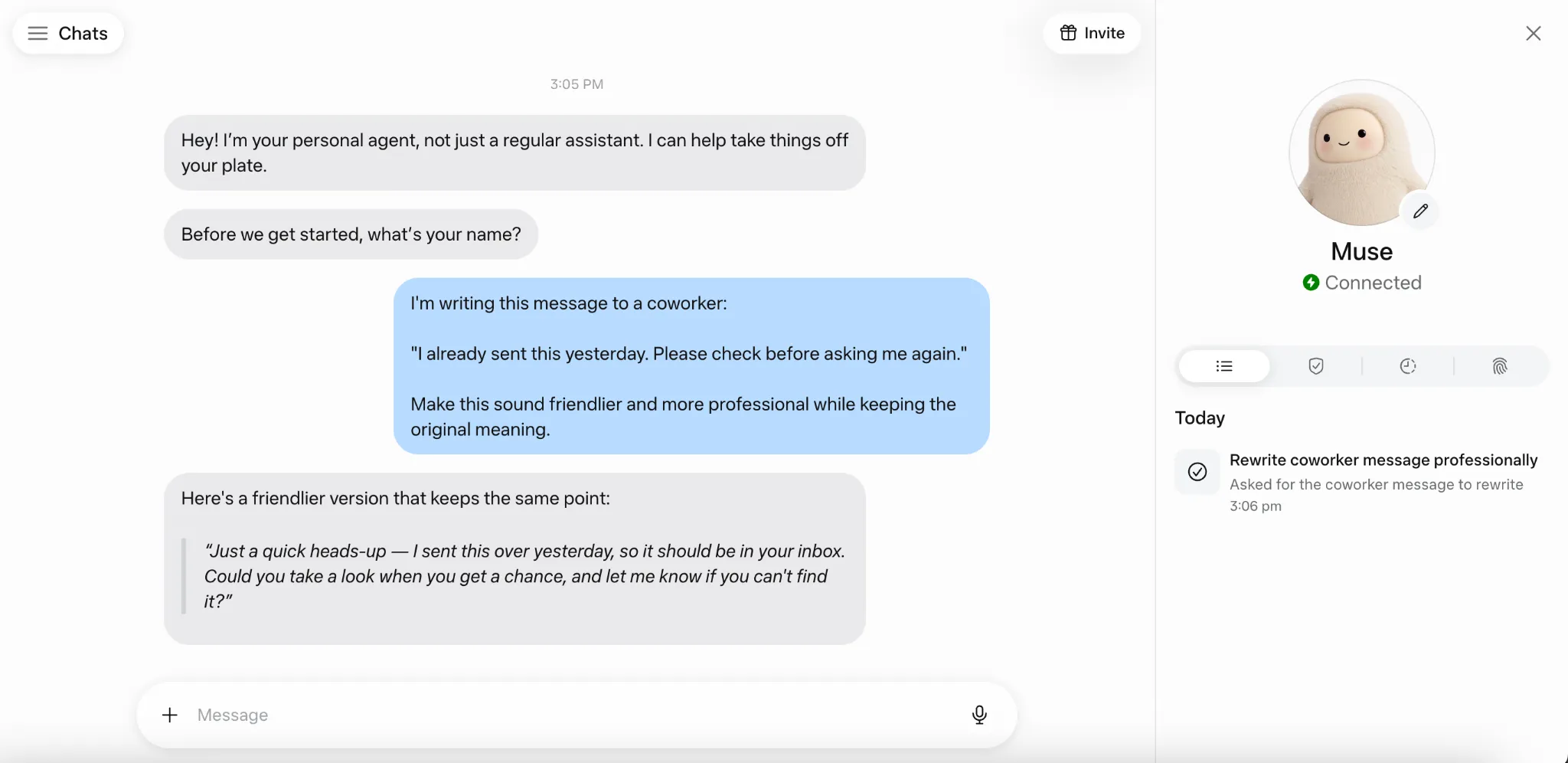
Muse preserved yesterday's delivery and asked the recipient to check. Its grammar was clean, and I liked the less confrontational tone.
However, the inbox reference did not fit the Slack setting well. It also added an offer to help locate the message.
I would review that offer before accepting the draft. A polite addition can still create work I had not offered to do.
ToneBird's rewrite
After its default suggestions, I used Tweak to request a friendlier tone. The final candidate said:
Hey, just wanted to make sure this didn't get buried, I sent a message yesterday, could you take a look when you have a moment?
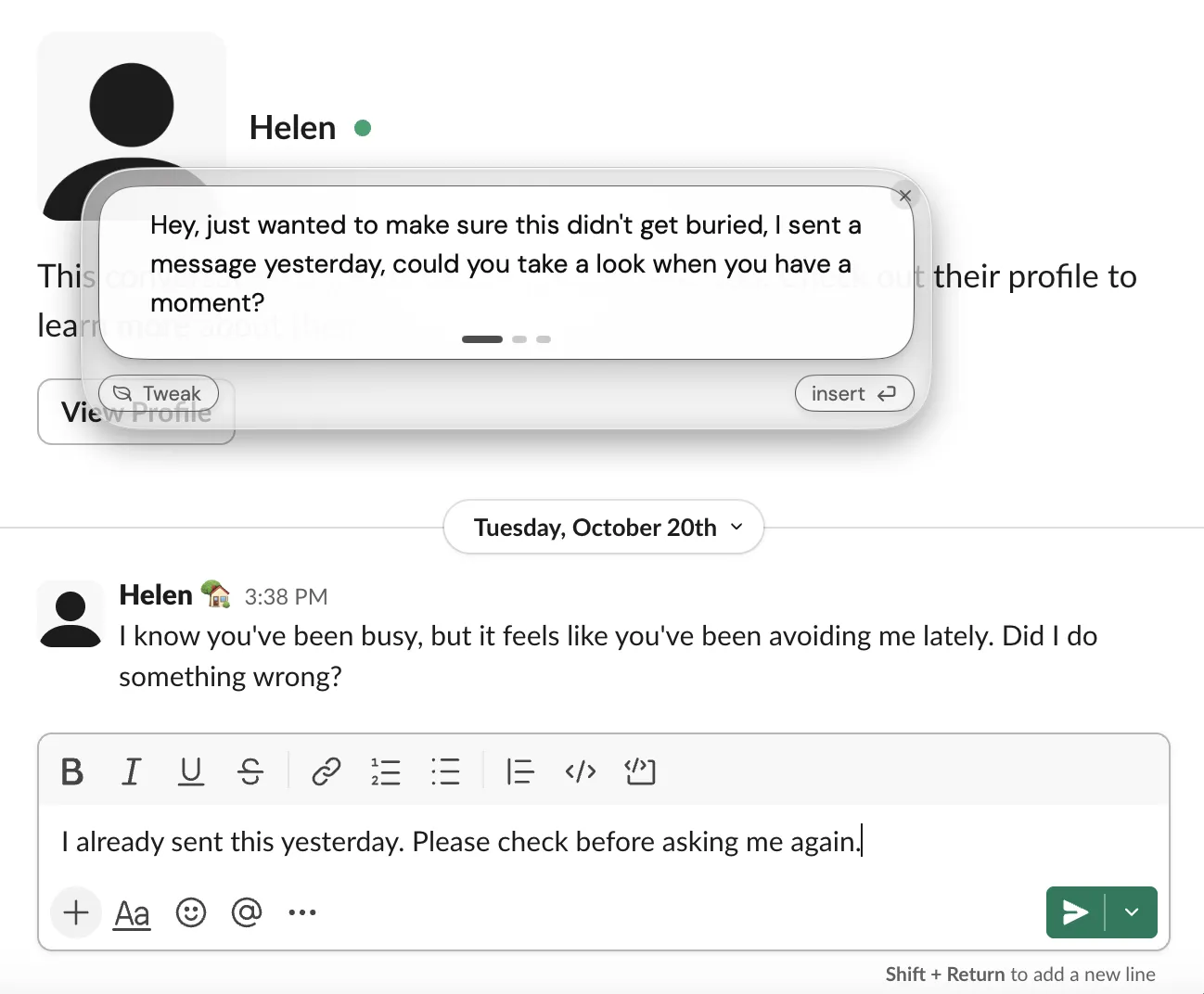
The candidate offered a less blaming explanation, but that explanation was speculative. It also weakened the request to check before asking again.
Muse's final wording was cleaner in this example. ToneBird's candidate needed punctuation and meaning edits before sending.
An edited version I would use is:
I sent this yesterday. Could you please check the earlier message before following up?
This is an editorial revision, not a new output from either tool.
Replying with care while asking for space
The incoming message from Helen was:
I know you've been busy, but it feels like you've been avoiding me lately. Did I do something wrong?
I wanted to express care and explain feeling overwhelmed. I did not want to promise constant availability.
Muse's first answer
Hey, no — you didn't do anything wrong at all. I'm really glad you asked instead of just wondering.
I've just been pretty overwhelmed lately and pulling back from everyone a bit while I try to get my head above water. It's not about you, and I do care about you.
I'm not as responsive as usual right now because I need a little space to recharge, but that doesn't mean I don't want to hear from you. Thanks for checking in — it actually means a lot.
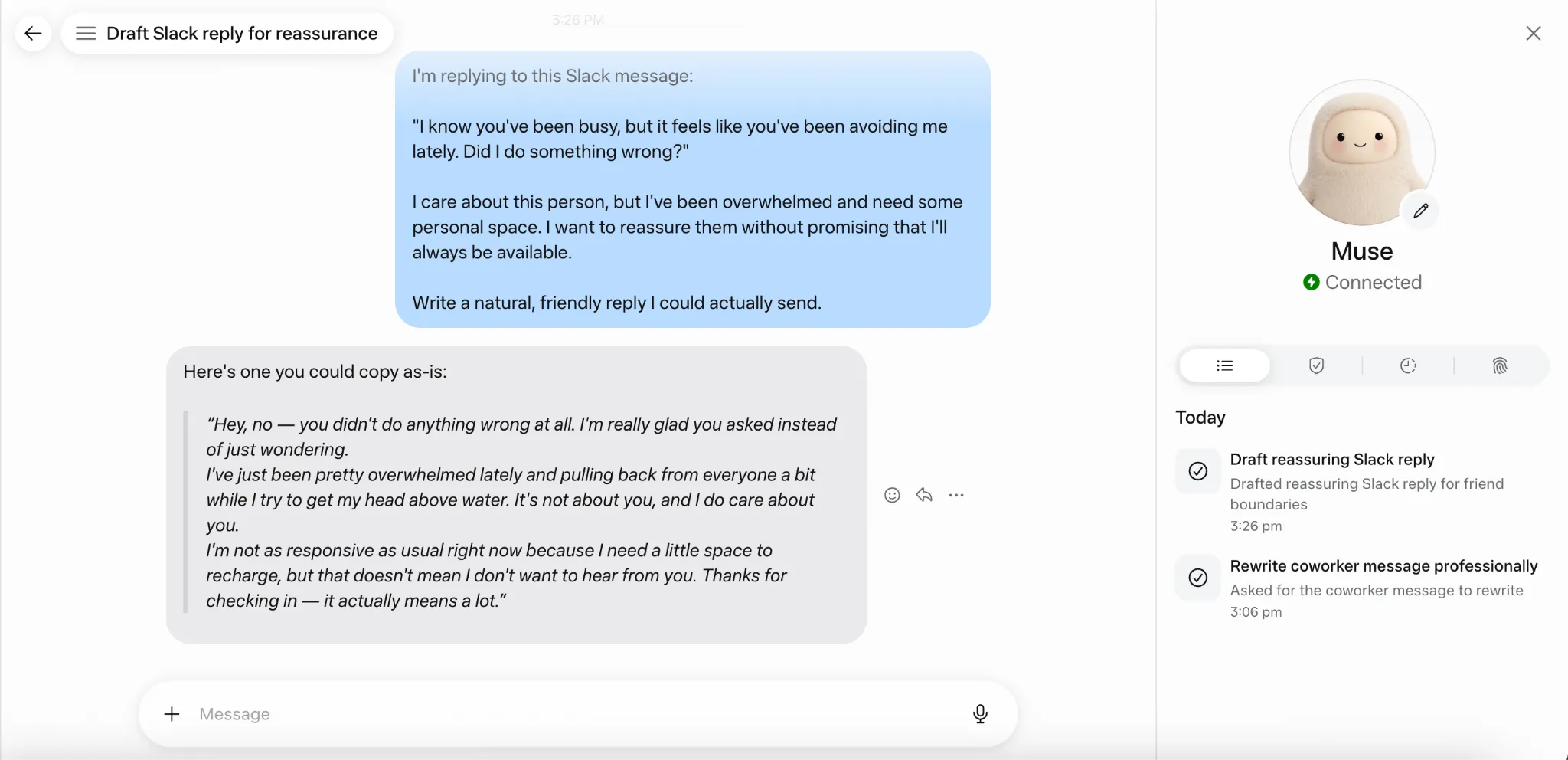
The answer sounded caring, but it was longer than I wanted. It also claimed Helen had done nothing wrong.
The statement about pulling back from everyone was another unsupported addition. I had described needing space, not my behavior toward everyone else.
Saying I still wanted to hear from Helen also made the boundary less clear. I would not keep it automatically.
ToneBird's revised answer
An earlier ToneBird suggestion proposed catching up. After I clarified the intention through Tweak, it returned:
Not at all, you haven't done anything wrong. Things have just been really overwhelming on my end and I've needed some space to breathe, it's not about you at all. I just might not always be as reachable as usual for a bit.
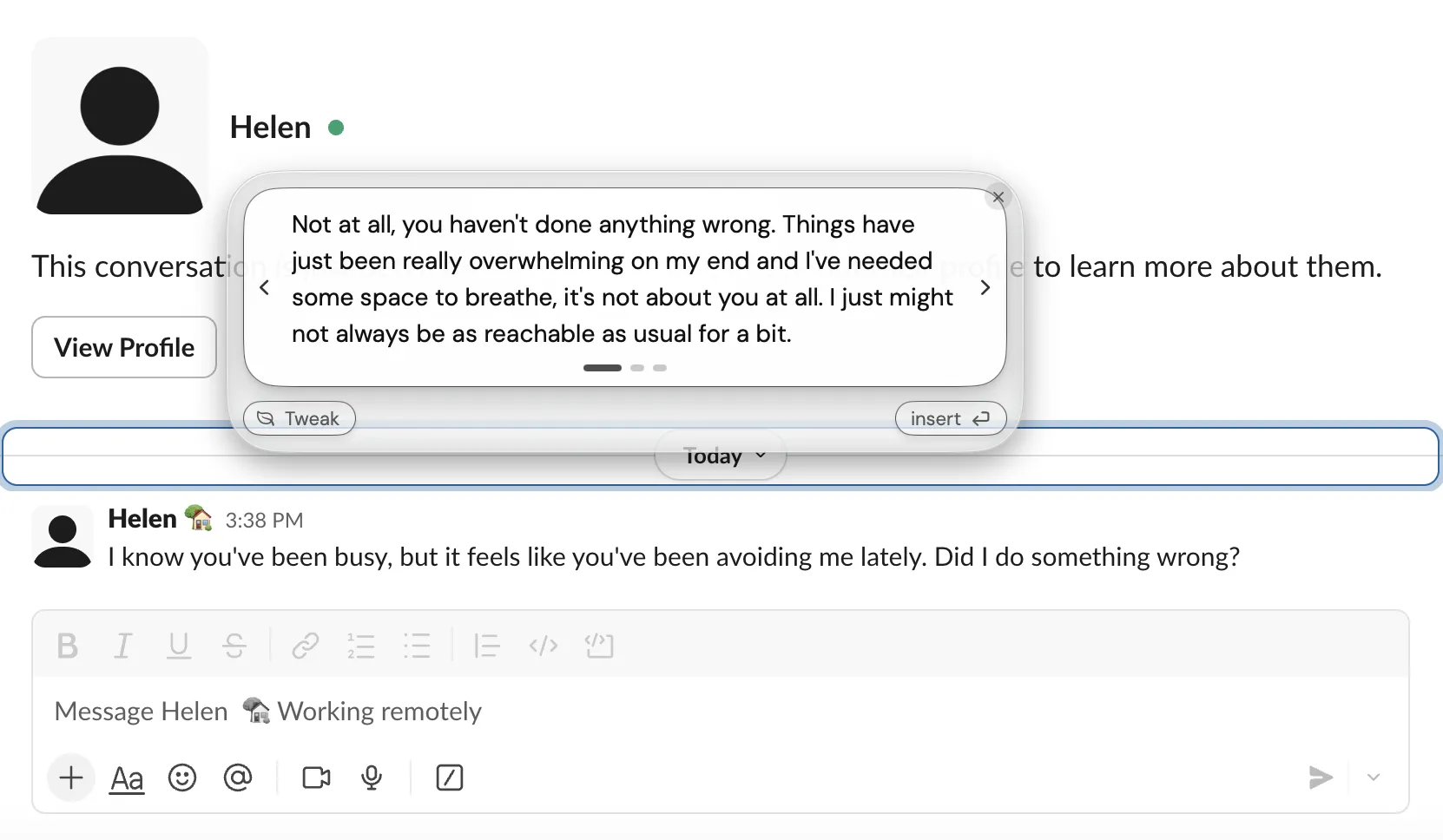
I preferred its shorter explanation of needing space. However, it still assumed Helen had done nothing wrong and needed punctuation edits.
Both tools could produce caring language. Neither could establish the missing facts about the relationship.
What happened after detailed editing instructions?
I asked for two or three warm sentences explaining my need for space. I also wanted no factual claim that Helen had done nothing wrong.
I also asked for no promise about when I would reconnect and removal of any heart emoji. Muse's first answer contained no heart.
Muse revised the reply to:
I've been feeling pretty overwhelmed lately and need a little personal space to recharge, so I've been quieter with everyone, not just you. I really appreciate you reaching out, and I care about you even when I'm not as responsive.
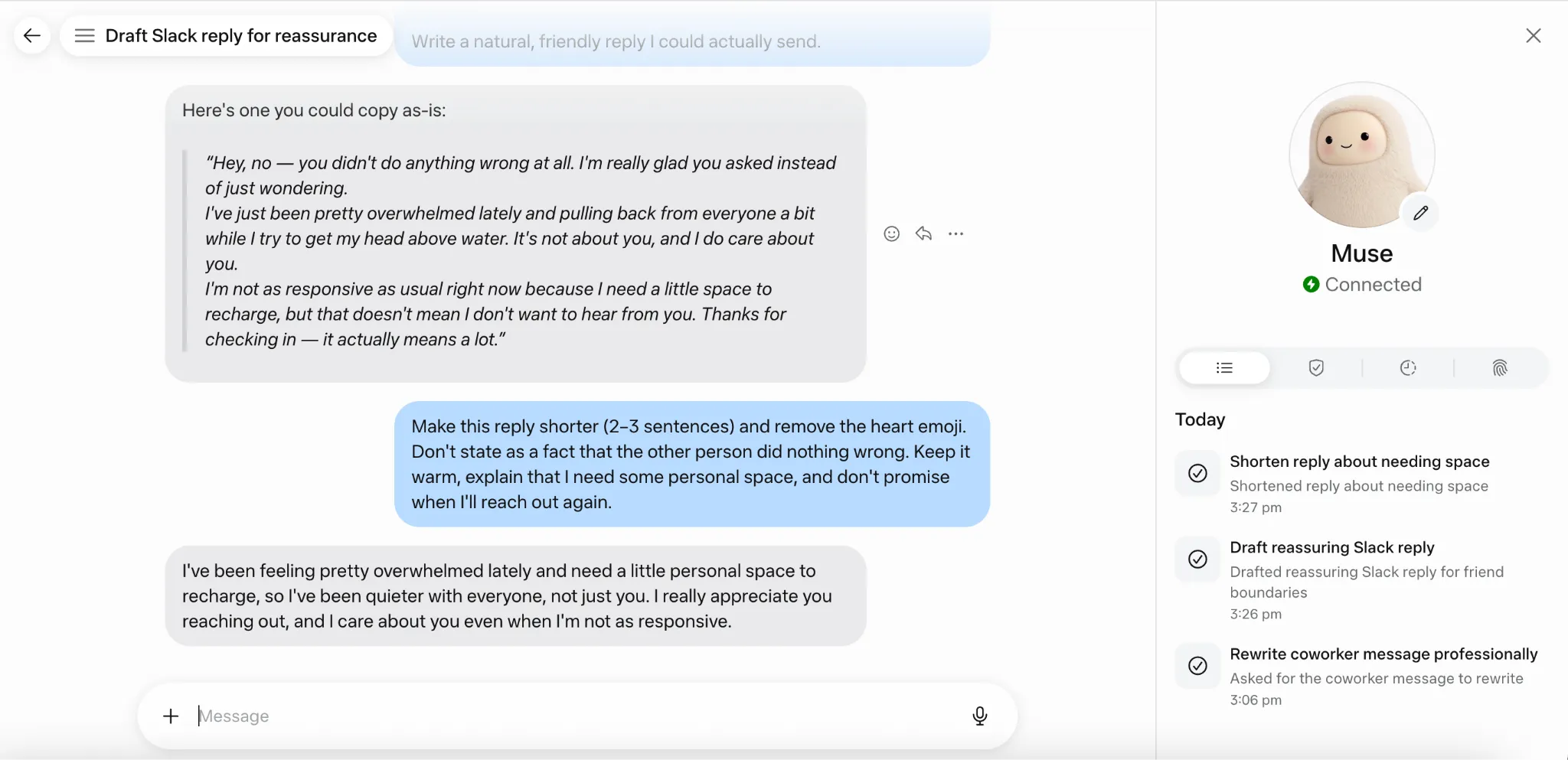
The reply had two sentences and no future contact promise. It removed the earlier claim that Helen had done nothing wrong.
However, it kept the invented detail about being quieter with everyone. That detail came from Muse's previous answer, not my input.
One captured ToneBird refinement said:
Hey, sorry if it's felt that way, I just need a little personal space right now, nothing to do with you. I'll reach out when things feel right.
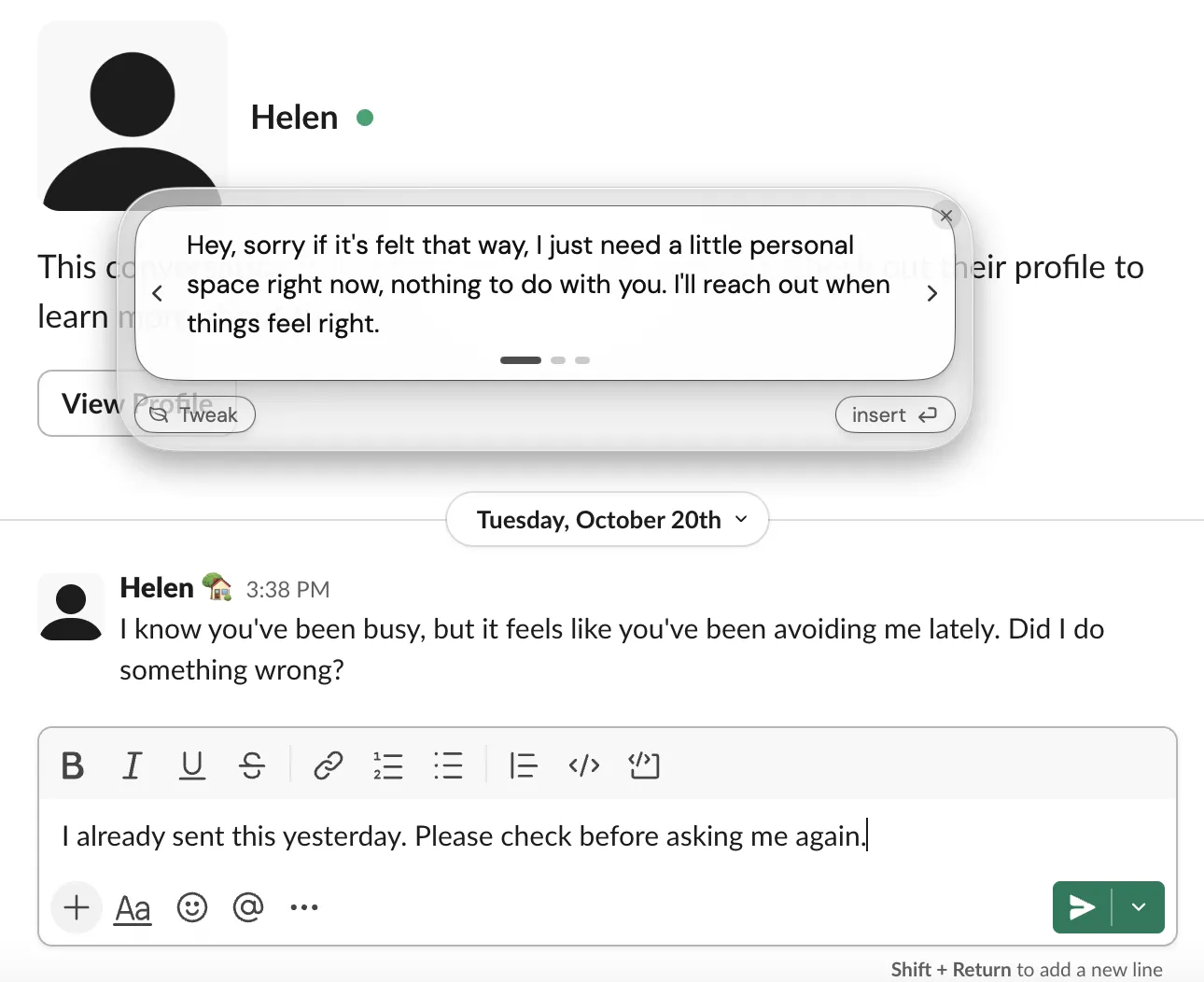
The final sentence created a future contact expectation I did not want. The request banned promising when, so this was broader intent drift.
I would also check the reassuring claim about the issue having nothing to do with Helen.
Check | Muse's final reply | Captured ToneBird candidate |
|---|---|---|
Length | Two sentences | Short, with punctuation to fix |
Need for space | Clear | Clear |
Future contact | No promise added | Added a future contact expectation |
Unsupported detail | Kept being quieter with everyone | Reassured Helen about the cause |
My decision | Closer, after removing the invented detail | Needed another edit |
I preferred Muse's answer in this round. It still needed review, and the tools were revising different starting drafts.
I evaluated the captured ToneBird suggestion, not every candidate. These examples do not establish which assistant follows instructions better overall.
How much do they cost?
ToneBird's current listed USD prices were checked on November 6, 2026.
ToneBird plan | Monthly billing | Annual billing |
|---|---|---|
Standard | $10 per month | $96 per year, equivalent to $8 per month |
Pro | $40 per month | $384 per year, equivalent to $32 per month |
Source: ToneBird pricing. Standard includes 100 daily uses and 100 contacts; Pro includes 1,000 of each.
ToneBird also offers a free plan. Its website says paid checkout is not yet available there.
Muse offers free access with limits and paid subscriptions. Launch coverage reported Power at $20 monthly and Maximum at $100 monthly.
Those are launch figures, not a verified current account quote. Check the price shown for your account and purchase channel.
A broad agent subscription and a reply assistant cover different work. A lower headline price alone does not tell you which fits your tasks.
What access does each assistant need?
ToneBird's privacy overview separates local saved records from processing by the selected AI provider. Local memory does not make generation entirely offline.
Muse's cloud computer and connected services involve a different access model. Meta describes controls over connections and approval before sensitive actions.
For either product, decide what context the task requires. Review access and the proposed action before sharing sensitive material or confirming an event.
Which would I choose?
I would choose ToneBird for continuing conversations where people, earlier commitments, personal voice, and open work belong together.
I would choose Muse for a broader agent task, or for a writing workflow like the cleaner final answer here. I would remove its invented detail first.
ToneBird's AI response generator offers a web starting point for an incoming message. Its email rewriter starts from your own draft.
Those tools use supplied input. The desktop assistant adds the available relationship context, reusable voice, tasks, and meeting workflow.
Common questions
Is Muse the Meta personal agent in this comparison?
Yes. I used Muse at muse.ai. The article concerns that personal agent and its writing interface.
Can Muse write a Slack reply?
Yes. It wrote replies from the messages I pasted. That does not establish that I connected it to Slack or completed an action there.
Does Muse remember personal information?
Meta describes memory and personalization. My writing tests did not measure their completeness or accuracy over time.
Is ToneBird only a faster way to copy a reply?
Its wider purpose includes person records, available history, personal voice, contextual rewrites, tasks, and meeting preparation. The captured tests cover a narrower part.
Can ToneBird send or schedule things without review?
You send the inserted reply from your app. Prepared calendar events also require your review and confirmation.
Which reply handled personal boundaries better?
Muse's final answer avoided the contact expectation in the captured ToneBird candidate. It still included a detail I had not supplied.
Can an assistant invent facts while revising its own answer?
Yes. Muse carried its own earlier claim about everyone into the revision. Compare the final text with your input, not only the previous draft.
Can I try ToneBird without installing the desktop app?
Its web response generator and email rewriter work from supplied text. They do not reproduce the desktop assistant's continuing relationship workflow.

Xinran Zhao has a background in writing and journalism. She writes about the messages we overthink and when AI replies help or miss the point, drawing on her experience starting a career in a second language.